‘What do you want to be when you grow up?’

What do you want to be when you grow up?

We’ve all been asked this question at some point in our lives, usually when we were children. But how many people actually end up doing what they wanted to do when they were younger?

I wanted to be an artist, and although I’m not pursuing this career path (mostly because my artistic abilities are limited to splatter painting and drawing stick figures), one of the bigger issues was what kind of job I’d be able to get. How would I financially sustain myself as an artist?

My family suggested I start a business after college.

Or become a doctor.

Or a nurse.

Or a lawyer.

None of these jobs sounded appealing to me, and the main aspect they have in common is that they pay well. Of course going into the medical field is respectable, and if I were to succeed in putting up a business I’d be financially stable. Generally, it seems the goal is to find a job that pays well because we need money to survive.

I recently told an acquaintance that I’m a double major in journalism and political science, and he quickly advised me to consider nursing because that’s where all the jobs are. And I realized he had a point. Journalism is a risky field to get into: the pay isn’t so great, and the continuous cutbacks on major publications (like the New York Times and Los Angeles Times) are definitely saying something about job stability in the field.

But sometimes you don’t do things for the money.

Businessman Herman Cain said, “Success is not the key to happiness. Happiness is the key to success. If you love what you are doing, you will be successful.”

While the constraints of finances never seem to go away, it’s refreshing to ponder about what we’d do if money wasn’t a factor. If all your necessities were going to be provided, what career would you like to or have liked to pursue? If you had everything you needed, how would you spend your days? And while it might seem impossible to survive in this day in age doing what we desire, it’s helpful to refer to another saying: “If there’s a will, there’s a way.”

We Can’t All Be Rich

A few semesters ago a teacher asked the class, “How many of you want to be rich?” Nearly half of all the people sitting in the room raised their hands.

With a huge grin on his face, he said, “It’s not gonna happen.”

Naturally, many of those who raised their hands became slightly upset. Why would a teacher shoot down the aspirations of students like that?

The thing is, my teacher had a very valid point. There’s a certain amount of money in circulation, and that money doesn’t really grow except for inflation. So with the number of people wanting to make lots of money, there’s a bigger picture: The more people who work, the smaller each person’s piece of the pie becomes. If there’s $100 billion in circulation, for example, and 100 people work, assuming each person gets an equal share of the money, each person gets $1 billion. But if 200 people work, each person gets $500 million. And as the number of people working increases, the amount of money each person gets decreases.

This isn’t something that’s really emphasized in society. Most of the time what we hear is that if we work hard, we’ll become rich. But with so many people wanting to make loads of money, how is this really possible? Despite how horrible this may sound, not everyone is going to make it big. But it’s not necessarily a bad thing because we don’t really require lots of money to attain happiness – it’s just something we’ve come to believe because it’s what we’re told over and over again.

The feeling a person might get after buying a new car or computer might make him or her happy, but isn’t there always at least the tiniest feeling of remorse over the money that has been poured into these things?

Sometimes I like to revisit my past, and I’ve found that my fondest memories are very simple (like learning how to ride a bike) and usually involve experiences with friends and family. Those tend to be the ones that stand out over buying or receiving expensive things.

Money Doesn’t Always Buy Happiness

My friend’s cousin has it all.Or at least she seems to.She lives in a beautiful mansion in Oceanside. She and her husband are both nurses so they make a six-digit annual household income. She and her husband own BMW cars. She also has a baby.

But she’s not happy.

Despite all these luxurious material possessions, she isn’t satisfied. As a nurse she works overtime and doesn’t get the opportunity to enjoy the material possessions she’s been able to purchase. After years of hard work and dedication to school, she finds herself stuck with an overwhelming work schedule that limits the time she gets to spend at home with her child.

We live in a consumer culture that tells us that we need to have ‘things,’ like big houses and fancy cell phones, to be happy.

In the end, though, do these things really make us happy? Does owning a huge house with giant plasma screen televisions make us happy? When a person gets to the point that they can afford expensive items, they’re probably like my friend’s cousin, who doesn’t have the time to take advantage of these things. And if they do have the time to sit at home and watch movies, and really enjoy what the huge house has to offer, is that really the way a person wants to spend their life? At home, if not working?

While this isn’t the case for everyone, it seems like it for a lot of people: come home from work and enjoy life inside the house.

Instead of our aiming to buy luxurious items, it might be a better investment to spend on experiences, like traveling and seeing the rest of the world. Unlike material possessions, those can’t be taken away from people. Helping other people who need it is also another way to go, and the good feeling that comes from helping others is another thing that can’t be taken away.

There’s No Difference – The Rewards Are the Same

Last week I visited Bank of America to refill my very empty wallet, and the teller I approached began talking to me and eventually got around to asking if I wanted to apply for a Cash Rewards credit card.

‘Well,’ I figured, ‘Why not?’

In a couple of minutes I was seated with a banker who pulled out a three-fold brochure comparing the types of credit cards Bank of America offers. The first two were the Power Rewards card and the Cash Rewards card. I examined the comparison charts trying to figure out how one might be better than the other.

For the Power Rewards card, you earn one point for every dollar spent. (Right now there’s a promotion where customers get up to five times as many points up until the end of June.) There are a number of options to choose from in redeeming rewards, but redemption starts at 2,500 points, which gets you $25. (Assuming you’re not using the card during any promotional period, you have to spend $2,500 before getting $25).

The Cash Rewards card gives customers cash back on every purchase. For the first few months you get 3% cash back, and after that you get 1% cash back. As an incentive, if you earn $300 in cash back before you start redeeming the cash rewards, you get an extra $25.

If someone were to spend $100 using the Cash Rewards card, that person would get $1 in cash back. If a person spent $2,500, they would get $25. Before ever getting around to acquiring $300 in cash back, a person would have to spend $30,000. (A person working at minimum wage doesn’t even make that much money a year!)

With the unique promotions of each card aside, both credit cards yield the exact same cash rewards, and even before a person can qualify for money back, the person has to spend 100 times more.

It’s Not So Bad Living with Mom and Dad

For years, moving out of the house by the time we turn 18 has generally been an expected chapter in every American’s life. At 18, an American is recognized as an adult, legally responsible for his or her actions. With that given, it only seems fitting that by then, an 18-year-old lives away from Mom and Dad.

Today, this seems less true.

In one of her class sessions, Melissa Wall, a journalism instructor at Cal State Northridge, said it’s becoming more accepted by society that college students, even those at the age of 20 and older, live with their parents.

One of my classmates in my first semester of college, Josh, was 25. He had lived on his own for a couple of years, but then moved back in with his parents. He previously held a job where he got paid $2,500 biweekly. But, he admitted to being young and reckless, and he ended up blowing off all his money without really saving anything. In 2008 he was living with his parents and helping pay for utilities and rent.

A current classmate, who’s a senior, said he might have to move back in with his parents if he wanted to do what he’s planning to do career-wise after graduating this semester.

Another case is my cousin, who just finished his term in the Navy and decided to go to college. Because of limited finances, he’s moved back in. Sometimes, it seems like he’s embarrassed about living at home again, but there’s really no reason for him to feel that way.

On the flip side, there are people like Ian, a guy in one of my journalism classes last semester. He lives on his own and receives no financial support from his parents, and he’s not on good terms with them. Last semester he was working fulltime, taking 16 units, and sleeping past midnight because he was only able to do homework after coming home from work. He also trained with the hockey team every morning at 7 a.m. He lives with some other roommates and said his share of the rent comes out to around $600 per month, and that he lives off of fast food for the most part since he’s always on the go.

A studio apartment in Northridge ranges around $700 per month. Utilities, cable, Internet, phone, and food are other expenses not included in this monthly bill. Let’s just say all the other monthly expenses come out to an additional $300, putting the total cost of living independently at $1,000. Somebody working fulltime at minimum wage makes a gross income of $1,280 each month, so that would leave around $200 for other necessities like tuition, books, and transportation.

There’s also the option to bunk with roommates, but since everyone has different ways of living and doing things, that may pose another problem.

Living at home isn’t really that bad of an option. Of course cases differ based on each person’s situation, but generally, staying with mom and dad should provide a platform for better financial stability. Chances are parents won’t charge for rent and food. And if they do, then it’s because college students are supposed to be transitioning into adulthood, and need to be more independent and responsible. Also, if mom and dad do ask for rent, it’s probably going to be minimal. That way, students can focus on school and on activities needed to further their academic and post-academic careers instead of working long hours to financially support themselves.

By living at home, students also have the opportunity to save whatever income they might be earning at work or receiving from scholarships. By saving money this way, students can secure finances for when they decide to move out, whether it’s during or after college.

Credit Unions Offer Alternative to Banks

May 11, 2011

GIVE THEM SOME CREDIT: The mission of credit unions is to serve their community members. Because they're not-for-profit institutions, community members will typically receive better rates and service than those at banks. (Photo by Agnes Constante)

Money just seems to be getting tighter and tighter these days, and for most people, there’s no choice but to live on a strict budget. Whether your money is in a savings account or locked in a time deposit, you’re really not seeing any more than chump change added to what you’ve got in the bank.

Credit unions offer a viable alternative to the for-profit model of banking institutions, and are able to offer a number of benefits to students based on their strucure:

1. Credit unions are not-for-profit institutions

The main difference between banks and credit unions is that banks are for-profit institutions, while credit unions are not-for-profit institutions. This means that they are tax exempt and are there to serve the needs of members of the community.

Unlike banks, where customers don’t have a say in who runs the institution, credit unions are governed by a board of directors elected by their members. Board members are volunteers who don’t get paid.

2. At a credit union, you’re considered a shareholder

“When you open an account, technically you become a shareholder of the credit union,” Stuart Perlitsh, CEO of the Glendale Area Schools Federal Credit Union (GASFCU), said. “You then own a share of the credit union.”

As a shareholder you have a voice in who sits on the board of directors, and you even have the right to run for a position on board if you’d like.

3. You’ll get better rates

Since the goal of credit unions isn’t to profit, members reap the benefits if there’s any extra income.

“The more members we have, the stronger we become,” Carolynn Lyons, business development director of the Glendale City Federal Credit Union (GCFCU), said.

Benefits may come in the form of higher dividends on savings accounts and/or time deposits, and reduced interest rates on credit cards.

4. More than 28,000 ATMs

One common myth about credit unions is that there is a lack of accessible ATMs, but there are actually thousands available throughout the United States. Both the area schools and city federal credit unions are part of an ATM network consisting of more than 28,000 fee-free ATMs. This outnumbers the roughly 18,000 Bank of America ATMs and 12,000 Wells Fargo ATMs throughout the nation. An added convenience, Perlitsh said, is that there is no fee for withdrawing cash at any 7-Eleven.

Credit unions also typically provide locators on their websites so it’s easier to find an ATM close to you.

5. Your money is insured

Similarly to how money in a bank is insured by the Federal Deposit Insurance Corporation (FDIC), funds at credit unions are also secure. Federal agencies like the National Credit Union Administration and the National Credit Union Share Insurance Fund typically cover $250,000 per account, just like the FDIC does for banks.

6. It’s easy to join!

If you live in a certain city, chances are you’ll be eligible for membership at a credit union. For instance, Burbank Community Federal Credit Union simply requires that a person lives, works, attends school, volunteers, worships, or belongs to an association in Burbank for membership eligibility. Similarly, the GASFCU only requires that a member is a student, faculty, or staff at GCC to open an account.

Most membership requirements can be found on the websites of the credit unions and by calling the institutions.

Other credit unions, like the GCFCU, have more specific requirements, such as being employed by the City of Glendale.

Even if you fall short of these requirements, the Glendale Area Schools credit union has partnered up with the city’s parent teacher association, while the Glendale City union has partnered up with and Friends of the Library. The unions will pay the fee for your membership in these city organizations, so that you are eligible to become part of the credit union.

Money might be getting tighter these days but there are credit unions around to genuinely help you make the most of what you’ve got.

Glendale Area Schools Federal Credit Union
1800 Broadview Drive
Glendale, CA 91208
(818) 248-7425 or (800) 844-5363
http://www.gasfcu.org

Glendale City Employees Federal Credit Union
517 E. Wilson Ave., Suite 102
Glendale, CA 91206
(818) 548-3976
http://www.glendalecitycu.org

http://www.elvaq.com/news/2011/05/11/Features/Credit.Unions.Offer.Alternative.To.Banks-3998284.shtml

Big Brother or Facebook? It’s Hard to Differentiate

March 30, 2011

In his 1949 novel “1984,” George Orwell coined the popular slogan, “Big Brother is watching you.” In the fictional world he created, everyone was put under surveillance and heavily scrutinized. Although this dystopia was meant to exist 27 years ago, technology has made Orwell’s 1984 world a reality of 2011. “Big Brother” keeps his eye over the world today, and we’re all being watched.
With the advent of Facebook in 2004, it has become hundreds of times easier to keep track of virtually everyone’s activities and whereabouts.Because every move made in cyberspace is tracked, and since that’s where many spend a considerable amount of time, Big Brother knows more about who we are than we probably realize.It’s not just that all of your friends, and maybe even people who aren’t your friends, have access to every wall post you share, status update you post, photo you upload, message you send, and even instant message you fire away: it’s that Mark Zuckerberg owns EVERYTHING you do via Facebook.
Yep, all that stuff posted does NOT belong to the individual who transmits the content online.When a user signs up for Facebook there’s a point in the process where the person has to get past a CAPTCHA. (This is a security measure that involves typing a display of distorted letters into a field to confirm that a person is creating an account. It is implemented to prevent the automated creation of multiple accounts.)

Immediately underneath the CAPTCHA is the sign up button, and underneath that is a teeny little sentence that reads, “By clicking Sign Up, you are indicating that you have read and agree to the Terms of Use and Privacy Policy.”

Although there are surely people who have taken the time to read Facebook’s terms and privacy policy, the lengthy jargon probably deters a greater number from understanding exactly what it is they’ve signed up for.

Well, of the seemingly countless lines of terms and conditions, there are two sections that state Facebook essentially owns whatever you do on Facebook, both of which come from its Statement of Rights and Responsibilities (which was previously called “Terms and Conditions”):

“For content that is covered by intellectual property rights, like photos and videos (“IP content”), you specifically give us the following permission, subject to your privacy and application settings: you grant us a non-exclusive, transferable, sub-licensable, royalty-free, worldwide license to use any IP content that you post on or in connection with Facebook (“IP License”). This IP License ends when you delete your IP content or your account unless your content has been shared with others, and they have not deleted it.”

What this verbose chunk of text means is that Facebook can do essentially anything it wishes with your intellectual property – your expression of thoughts and ideas through writing, photos, and videos – posted on the social networking site. And if the company makes money off of your writing, photos, or videos, you don’t get compensated for it.

In the FAQ section of this social networking utility, it is stated that users retain copyright to their content. But what does that really matter when Facebook is allowed to make money off of your intellectual property without giving you part of the profit? Basically, Facebook holds just as much copyright to your content as you do.

Fortunately, there’s a way to terminate Facebook’s license to your content.

Well, sort of.

The previously cited text states that Facebook’s license to your intellectual property “ends when you delete your IP content or your account.”

Unfortunately, if your content somehow remains on the account of another user, whether that user was tagged in a photo or if the user saved your content and uploaded it into his or her account, Facebook still has the right to use the content the same way as if it were still on your account.

Another way that Facebook may circumvent users’ absolute right to control over their content is stated in another wordy section in its Statement of Rights and Responsibilities:

“When you delete IP content, it is deleted in a manner similar to emptying the recycle bin on a computer. However, you understand that removed content may persist in backup copies for a reasonable period of time (but will not be available to others).”

When a recycle bin on a computer is emptied, files aren’t completely erased in that instant. In fact, they can actually be recovered, depending on how long ago the files have been deleted. (Files can be retrieved if attempted in a timely manner, before the computer saves something new to the partition of the hard drive that has been cleared.)

What does the company mean by “a reasonable period of time?” Does that mean that everything put on Facebook remains floating around in cyberspace indefinitely? Who exactly are the “others” that deleted content won’t be available to? Other users? What does the company get to do with the “backup copies” of content?

There doesn’t appear to be any clear definition of these references in Facebook’s terms.

If that’s not enough to worry about, there’s also the fact that the social networking utility tracks down the browser you use, the pages you visit, your location, and your IP address. Since IP addresses are unique to specific locations, it’s easy to figure out where a person lives, works or goes to school.

There’s also Places, a feature Facebook launched in August 2010 that allows users to announce their exact location, who they’re with, and what they’re doing on their walls.

It’s probably a fun thing to do since many people publicize their whereabouts and activities. But for those who use this feature, it’s important to keep in mind that by doing so, a multibillion-dollar company has recorded your location, and potentially your activity and companions with you at that time.

At the moment, the information you put up is used in a couple of ways.

Your “likes” on Facebook are used so companies can more specifically target their advertisements.

By default, your Facebook profile is made available to public search engines so that anyone who types your name into Google or Bing may stumble across your page.

Also, before using an app or playing a game, it is necessary to grant the third party hosting the app or game to access your basic information, including your “name, profile picture, gender, networks, user ID, list of friends, and any other information I’ve shared with everyone.” In January, Facebook extended the scope of information to which these third parties can request access, including your address and phone number.

Anything put up online is subject to scrutiny.

When the Patriot Act passed in 2001, the government gained the legal authority to increase surveillance measures for national security reasons. Among a number of things, it allows authorities to wiretap phone calls and electronic communications.

Guess what kind of communication Facebook is.

Big Brother knows so much about us, and it’s really unnerving. Credit card transactions can reveal where you prefer to shop, phone bills show the people you text and call most frequently, and customer service hotlines sometimes monitor phone calls for ‘quality assurance purposes.’

If you have a Facebook profile, what does it reveal about you? In addition to the fact that whatever is on there doesn’t belong to you, Big Brother can see everything because he’s still watching.


No Strings Attached, Doesn’t Get Too Attached

Jan. 26, 2011

WHAT'S UP DOC?: Ashton Kutcher offers his carrots to Natalie Portman in "No Strings Attached."

Having friends with benefits may be convenient, but things can become sticky when emotions get involved.

From the director Ivan Reitman (“My Super Ex-Girlfriend,” 2006) comes “No Strings Attached,” starring Natalie Portman (“Black Swan,” 2010) and Ashton Kutcher (“Valentine’s Day,” 2010) as Emma and Adam, long-time friends who agree to sleep together as long as they don’t fall for each other.

The setup works well for the two in the beginning but their attraction toward each other grows quickly, making it complicated for them to continue what they’re doing. At this point Emma and Adam decide not to see each other until they’ve both slept with different people. The time apart only makes the two fonder of each other, and they almost immediately get back together.

The two try to take their relationship, or whatever it is they have together, to the next level by going out on a date. While on the date, Emma, who is not an affectionate person, becomes frightened by the possibility of getting hurt further down the road. She expresses her worries to Adam, and they both decide to put an end to their agreement.

Those seeking a light movie with good comedic relief will definitely enjoy “No Strings Attached.” Portman and Kutcher bring fresh chemistry to the big screen that makes this romantic comedy a very enjoyable to watch. They both deliver vibrant portrayals of their respective characters, but still manage to convey an honest sense of the emotional battles they have to fight in the situation they put themselves in.

The storyline is predictable but incorporates realistically awkward moments between the characters, including silences and odd dialogue.

There are also many comedic moments that will have audiences laughing throughout the movie. The supporting characters, particularly Emma’s coworkers and Adam’s friends, contribute largely to the humor in the film.

“No Strings Attached” is rated R for sexuality, language and some drug material. Runtime is 110 minutes. In theatres everywhere.

My rating: 2.5 out of 5 stars.

http://www.elvaq.com/home/index.cfm?event=displayArticle&ustory_id=8681af32-ddf5-47b1-b8b9-c6bb01bcb9f7

Whitman and Brown Face Off in Final Debate

Oct. 27, 2010

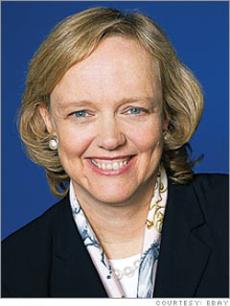
Former eBay CEO Meg Whitman
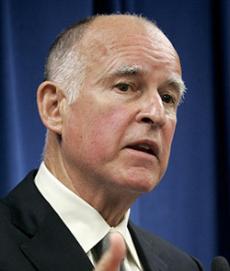
In the final California Gubernatorial Debate, candidates Democrat Jerry Brown and Republican Meg Whitman seized the final opportunity to convince the voting public of who should be the next governor of California.

The debate was held Oct. 12 at Dominican University in San Rafael and was moderated by Tom Brokaw, anchor and managing editor of NBC Nightly News.

The topics outlined for the debate were the economy and jobs, budget and pensions, immigration, and health care, but the contenders dwelt on highlighting their own track records and attacking each
other.

Attorney General Jerry Brown
The California fiscal crisis was of primary concern as each candidate offered remedies while attacking the opponent’s.

“I would do my utmost to return authority and decision making to local communities where it’s closer to the people,” Brown said. “One thing I wouldn’t do to compound our budget deficit and our tax unfairness, I wouldn’t totally eliminate the capital gains tax, which what my opponent Meg Whitman wants to do. That cap gains tax benefits mostly millionaires and billionaires and would add $5 to $10 billion to our budget deficit, and a lot of that money would have to come out of our public schools.”

Often during the debate Whitman said she would take steps to create jobs in California. She also presented her experience in business and bashed Brown, who she claimed didn’t have similar experience.

“We have got to get someone in office who knows what the conditions are for small businesses if are to grow and thrive,” Whitman said. “My track record is creating jobs. My business is creating jobs. Your business is politics. You’ve been doing this for 40 years,” she said to Brown.

With the state in a budget deficit, both candidates said they had plans to balance it. Brown proposed starting the budget process in November, returning power to the local level, and cutting the salaries of those in the governor’s office by 10 to 15 percent. Whitman said the size of the government needs to be condensed, and that the public employee pension and welfare systems need to be reformed.

Another issue the contenders were asked to share their thoughts on was Proposition 23, which would suspend the Global Warming Act of 2006, also known as AB32.

Both Whitman and Brown are in favor of AB32, but Whitman proposed a one-year moratorium to “fix it.” She said only 3 percent of jobs are green jobs, while the remaining 97 percent are jobs in various other sectors. Without the one-year freeze, Whitman said the 97 percent of jobs in other sectors could be jeopardized.

Brown said there is no study indicating 97 percent of the working class would be affected by AB32 and a freeze would create regulatory uncertainty. He said the act could actually benefit the economy.

“If you put thousands to people to work, retrofitting buildings so that they don’t burn as much energy that will put people to work here. It’ll save money to consumers … and over the last 30 years it saved Californians over $50 billion.”

Immigration was also dealt with in the hour-long debate. Brokaw posed the question first to Whitman, who said she did not know she had hired an undocumented housemaid until just recently. Brokaw asked how Whitman expects businesses to be held accountable for hiring such workers, if she did not know about one living in her home for nine years.

“This is why we need a very good e-verify system, that allows a business of every size to look at documentation and know whether it is real or not,” she said. “But we have to hold employers accountable for hiring only documented workers.”

Whitman said illegal immigration is a big issue in California, with estimates that $6 to $7 million of the budget going to services for undocumented immigrants. She also supports the creation of a temporary guest worker program and increased border security.

Brown agreed that businesses should be held accountable for hiring undocumented workers and proposed immigration reform at the federal level that would provide a path to citizenship.

The election for the governor of California will be on Nov. 2.

http://www.elvaq.com/home/index.cfm?event=displayArticle&ustory_id=727077e9-f7be-4b7a-90d3-e5d96d94a425

President Obama Addresses Higher Education Concerns

Sept. 29, 2010

President Barack Obama participates in a conference call with college and university student-journalists in the Oval Office, Sept. 27, 2010. (Official White House Photo by Pete Souza)

President Barack Obama hosted a teleconference Monday morning with student journalists from colleges and universities across the nation to discuss steps his administration has taken to address higher education concerns of young Americans.

In his opening remarks, the president said that the United States has fallen behind in education.

“In a single generation we’ve fallen first to 12th in college graduation rates for young adults,” he said. “And if we’re serious about building a stronger economy, making sure we succeed in the 21st century, then the single most important step we can take, is to make sure that every young person gets the best education possible. …”

In Obama’s 2009 State of the Union address he proposed that by 2020, the United States would once again have the highest proportion of college graduates in the world.

On Monday he discussed the policies his administration is planning to implement, as well as those that have already been implemented, to reach this goal.

One of the steps the president is taking to make education more available to students is by changing the way federal student loans are administered.

“Instead of handing over $60 billion in unwarranted subsidies to big banks, that were essentially getting this money to fulfill the loans that were guaranteed by the federal government, we’re redirecting that money so that it goes directly to students,” he said. “And that’s allowing us to support community colleges and make college more affordable for nearly 8 million students and families.”

The passage of the Affordable Health Care Act earlier this year is also expected to help students, as it allows young adults to remain under their parents’ health care plans until the age of 26.

Another step the Obama administration is taking is to ensure that higher education creates a workforce that will be ready for new jobs in the future. Obama said that community colleges will play a crucial role in this step and has planned a first-ever White House summit on community colleges for next week.

“That way stakeholders are going to be able to discuss how community colleges can make sure we’ve got the most educated workforce in the world in relevant subjects that help people get jobs,” he said.

The third step of the higher education strategy is to make sure more students graduate from college.

The president said that more than one third of the nation’s college students and more than one half of minority students fail to obtain a degree even
after six years.

“And that’s a waste of potential, particularly if folks are racking up big debt and then they don’t even get the degree at the end – they still have to pay back that debt, but they’re not in a stronger position to be able to service it.”

Obama said that while it is ultimately up to students to finish school, his administration can help in eliminating certain barriers, particularly for students who attend school while working or raising families.

“So that’s why I’ve long proposed what I call a college access and completion fund, which would develop, implement and evaluate new approaches to improving college success and completion, especially for kids from disadvantaged backgrounds,” he said.

The administration is also ensuring that younger veterans receive educational support with a post-9/11 G.I. Bill.

The president has included undocumented students in his plan for a more accessible higher education and said that the DREAM Act needs to be passed.

“Some of you are probably aware this is important legislation that will stop punishing young people who – their parents brought them here; they may not have been documented, but they’ve for all intents and purposes grown up as American young people,” the president said.

The DREAM Act would allow these students to obtain legal status by continuing with their higher education or serving in the U.S. armed forces.

President Obama entertained questions from four student journalists upon explaining the gist of his higher education strategy.

Colin Daileda from Radford University in Virginia asked what other steps the president is taking to help students attain a level of stability after college, apart from the Affordable Health Care Act.

“The key is for us to keep on improving the economy, and that’s going to be my number one priority over the next several years,” Obama said. “If … we’re investing in small businesses so they can open their doors and hire more workers, if we’re … investing in clean energy – all those things are going to open up new opportunities for young people with skills and talent for the future.”

In subsequent questions, the president clarified other ways in which it would be easier for young Americans to obtain a higher education.

In modifying the way federal loans are administered, student graduates will not be required to pay more than 10 percent of their salaries per month to fulfill their loans. Additionally, graduates who enter public service will be forgiven any remaining student debt after 10 years as long as they keep up with their payments.

Although young adults can now stay under their parents’ health care until the age of 26, this provision of the Affordable Health Care Act assumes that the person’s employer does not offer health care. Should an employer provide health care for a young adult, this person cannot opt to be under his or her parents’ plan instead, and must accept the employer’s offer.

Obama closed by encouraging young adults to remain optimistic about the future.

“I know we’ve gone through a tough time these last two years. And I do worry sometimes that young folks, having grown up or come of age in difficult economic times, start feeling as if their horizons have to be lowered and they’ve got to set their sights a little bit lower than their parents or their grandparents. And I just want to remind people that you guys all have enormous challenges that you’re going to have to face, but you continue to live in the most vibrant, most dynamic, wealthiest nation on Earth.”

He added that in order to overcome the obstacles faced by today’s generation, students should maintain an awareness of politics and actively take part.

“We’ve got an election coming up. I want everybody to be well informed and to participate. If you do, then I feel very optimistic about the country’s future.”

http://www.elvaq.com/home/index.cfm?event=displayArticle&ustory_id=842d60f7-2ba6-4410-bef6-e77d74195d48